 Project
Benko
ProjectWe go into cities where waste collection is broken or missing and build the system from the ground up. Collectors, recyclers, and city governments, connected so the waste pays for itself.
Not one-off cleanups. The system that makes the change last.
Each phase pays for the next. We start with one ward and grow until waste funds itself.
Waste stops being an environmental liability.
One ward. Sorting goes in, results get documented.
DetailsWaste becomes a managed resource.
Replicate ward by ward. Recyclable revenue starts flowing.
DetailsWaste becomes a revenue stream.
Fees and materials cover the running cost. The system pays for itself.
DetailsWaste becomes energy.
A proven record makes waste-to-energy fundable. Earned, never promised.
DetailsPresentation at the SAE Institute, Berlin
Afterwards, we collected roughly 100kg of trash near the campus.
Recycling is a lie. The plastics industry knew by the 70s it wouldn't work at scale and sold it anyway, because a guilty consumer is a paying one. Less than a tenth of all plastic ever made actually got recycled. The rest sits in landfills, in oceans, and by now, in us and every organism.
They even wrote the guilt for us. The "carbon footprint" was invented to make the crisis feel personal and keep the light off the people running it.
None of it was ever yours to fix alone. The system to deal with waste was simply never built, so that's what we do: take what already works in countries where waste is an economy, drop it where it isn't, connect the people already collecting to the people already buying, and turn the mess into money.
Anyone can run a cleanup. We're building what makes the next one unnecessary.
In cities like Singapore and across the Tokyo Bay area, waste is not buried. It is burned cleanly inside the city to make power and heat. Volume drops around 90 percent, the ash is reused, and emissions stay tightly controlled.
The point: treated as fuel, waste stops being a cost and becomes revenue the city owns.
Phase 4, the end goal: connect sustainable collection to clean industrial-scale incineration. The plan is to partner with companies that already run this, the kind of waste-to-energy proven across Singapore and the Tokyo Bay area, joining the collection we build to the energy recovery they operate, and turning the trash problem into profit.
| Landfill | Energy recovery | |
|---|---|---|
| Land | Consumed permanently | Footprint stays small |
| Emissions | Methane released | Controlled flue gas |
| Economics | Ongoing cost, zero return | Power and heat sold |
Getting people to sort is not about posters. The evidence points one way.
People cannot sort into a service that does not exist.
People burn when nothing reliable reaches them. Fix that and the reason goes.
Sorting rises when it pays or saves effort, not when it is encouraged.
Two marked bins at the door beat any campaign.
Existing collectors carry new habits further than outside rules.
The first designated Healthy City of the WHO in Nepal. 32,000 residents, with six of twelve wards on zero collection service. Benko's first municipal contract. The pilot ward launches August 2026: two weeks, one ward, full documentation, payment on delivery.
Benko's first public presentation, delivered in Berlin. The starting point for the credibility trail behind every project on this page, and the model for how Benko opens a new city: presentation and cleanup first, formal engagement after.
Every region gets its own approach, the context differs everywhere, so the model is adapted, never copy-pasted. The common thread is building a network of cleanups and university presentations first, then making the case for a system suited to that place.
Educational outreach across schools and universities is already running in China and Hong Kong. Japan, where clean waste-to-energy runs at industrial scale, is the reference for the Phase 4 end goal.
Benko's European foothold. Early coordination in Berlin is scoping the model for a high-income city, where the focus shifts toward recovery rates and the energy value of residual waste.
Cleanup footage is already filmed in the Philippines. Municipal contexts here resemble Dhulikhel closely, so the documented Nepal model transfers with the least adaptation.
Priority markets on waste volume and the strong informal collector networks the model formalizes rather than replaces. Early university and partner outreach is underway.
Cleanup footage already filmed on the ground. A high-income variant, where the focus shifts toward recovery rates and the energy value of residual waste.
Network building is underway. An organic-heavy waste profile makes composting and biogas the strongest early fit for the local system.
You have a waste problem. We build the system that solves it and generates revenue from it. Phase 1 costs less than one week of your current truck budget.
You need volume and consistency. We formalize collection routes and connect you to segregated, sorted material. Direct incentives, no middleman markup.
You are on the ground. We can sponsor cleanups, document the output, and fold your work into a larger system that creates permanent change instead of one-off events.
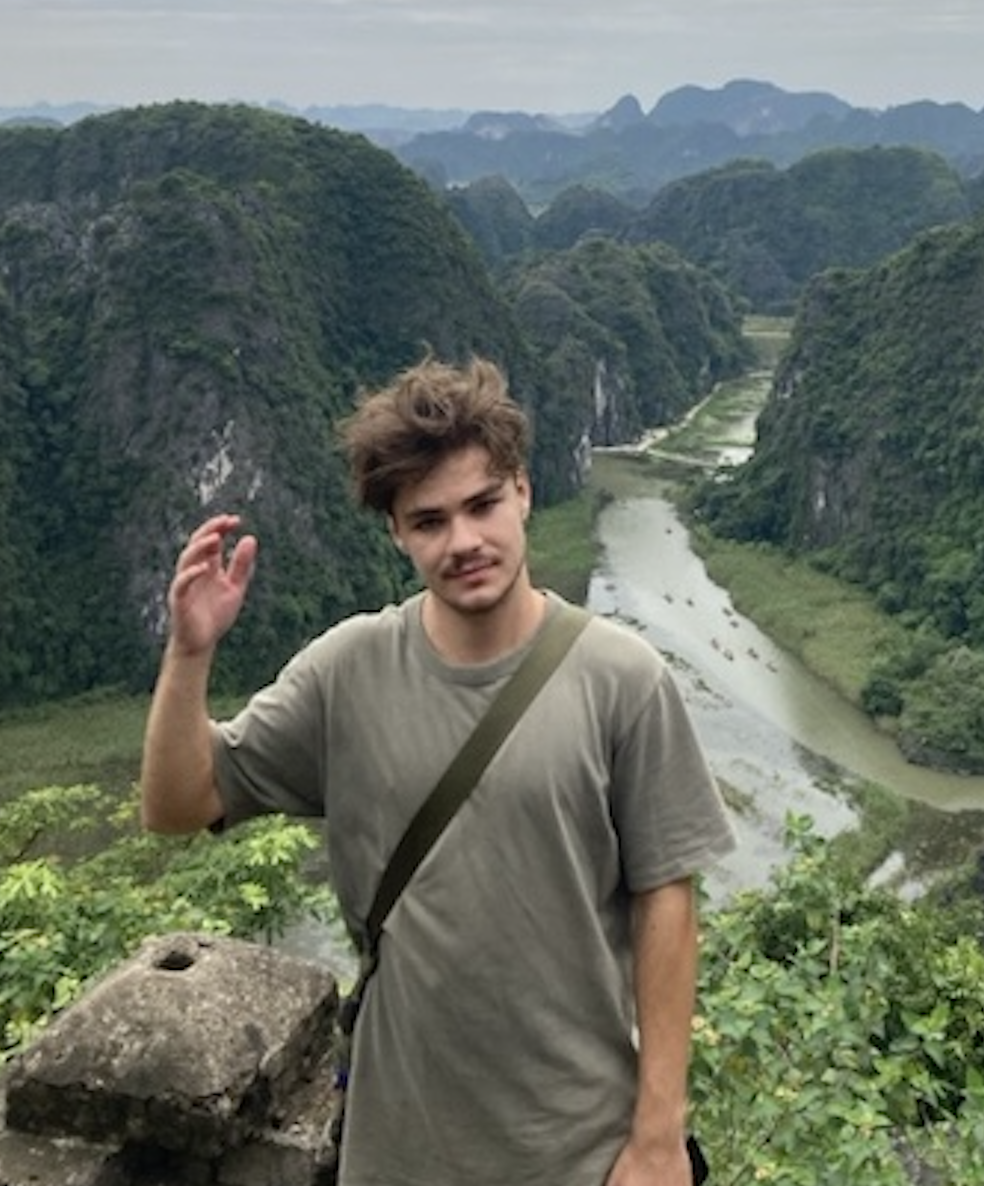
Throughout my travels, I noticed gorgeous places drowning in trash. And elsewhere, that same trash sorted, processed, turned into fuel or revenue. The difference is never the people. It is always the system.
Someone working sixty hours a week to keep their family going does not have the bandwidth to sort recyclables. That is not apathy. That is what happens when infrastructure was never built for you. The problem got shipped downstream and rebranded as personal responsibility.
The solutions exist. They just exist somewhere else. Benko takes what works, adapts it, and builds it where it is actually needed. Not as charity. As infrastructure. Because when waste has value, and the system is designed right, everyone in it benefits.
Simple Action. Real Results. Direct Incentives.
Benko is a sustainability consulting startup. We work directly with cities, communities, and municipalities to redesign how they manage trash, making it more efficient, cutting costs, generating revenue, and reducing pollution in the process.
No. Benko is a startup, not an NGO or charity.
We're a trash consulting company, and we get paid once we've successfully shown a city, municipality, or community how to minimize its losses from waste, clean up and keep its environment clean, and turn that process into profit.
We show them the numbers. The facts and statistics make it clear there's no real risk in adopting the system, so it becomes an easy call.
By impact. Waste that used to be a liability, harmful to nature, animals, and people, gets turned into a productive part of a functioning local economy.
Dhulikhel, Nepal. Our first live implementation.
Yes, on the education and networking side. We've presented in Berlin, Germany, and we're building relationships with international schools across China to spread the model and open doors for future projects.
Right now, just the founder. Benko is early-stage and self-funded.
Apply to help present Benko's work, help spread the word, or reach out if you want to organize a cleanup.
Whether you are a municipality, a recycler, an NGO, or someone who wants to be part of this, reach out.